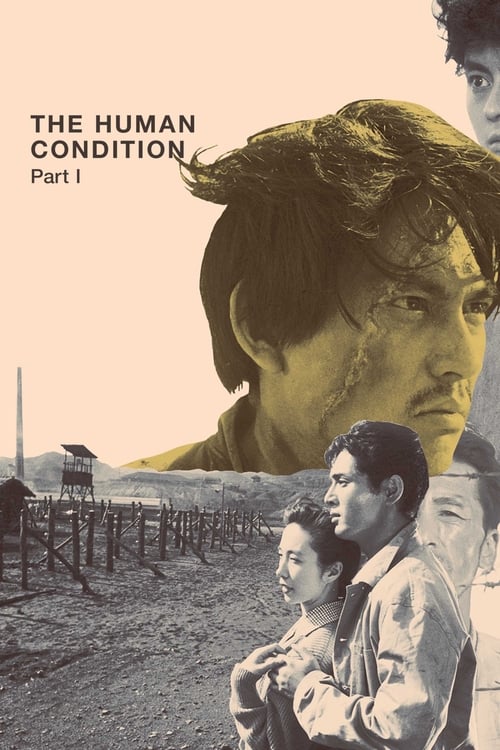

The Human Condition I: No Greater Love
The Immortal Story.
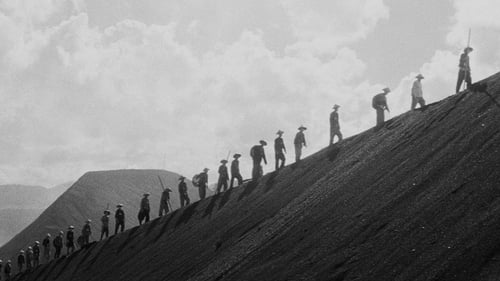
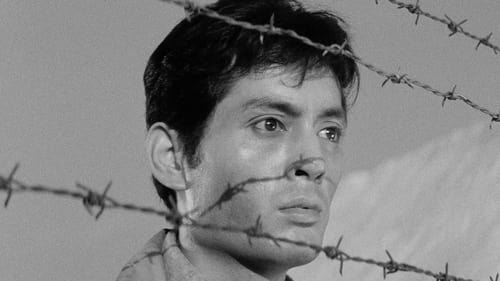
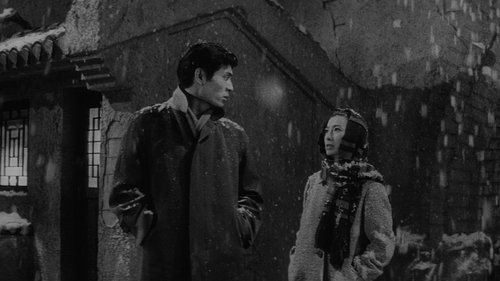
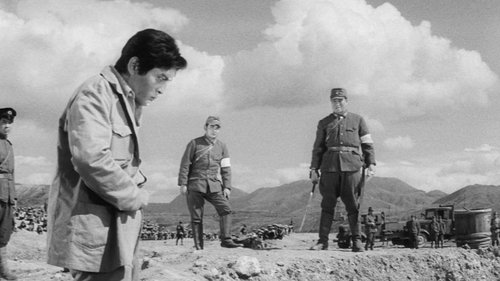
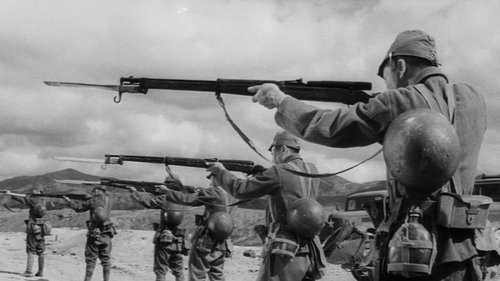
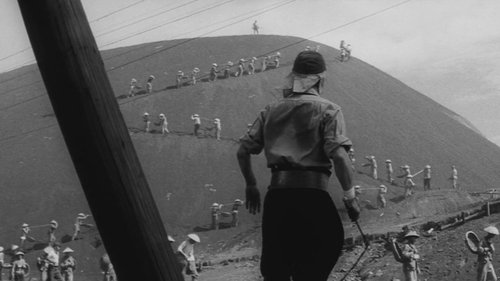
After handing in a report on the treatment of Chinese colonial labor, Kaji is offered the post of labour chief at a large mining operation in Manchuria, which also grants him exemption from military service. He accepts and moves with his newlywed wife Michiko, but when he tries to put his ideas of more humane treatment into practice, he finds himself at odds with scheming officials, cruel foremen, and the military police.
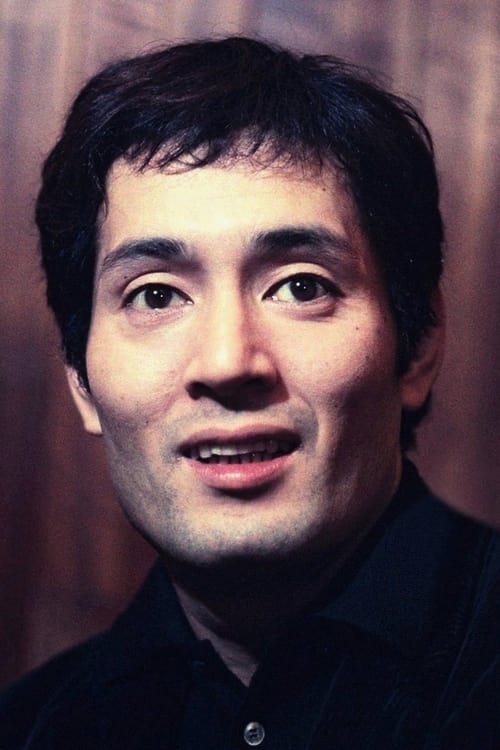
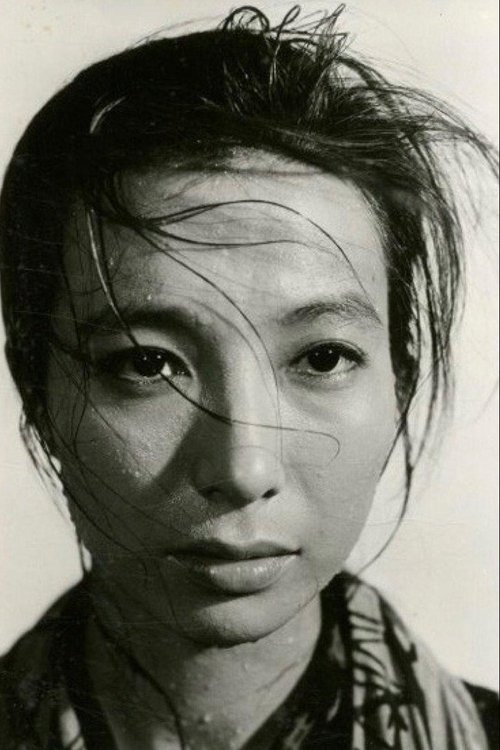
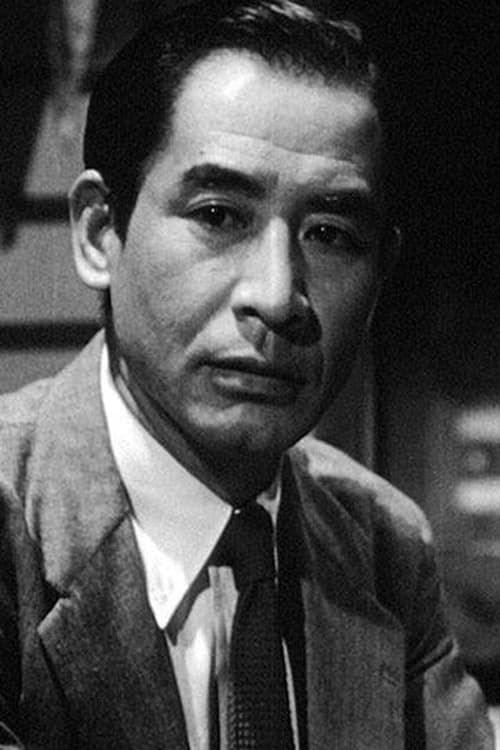
Top Billed Cast






Photos
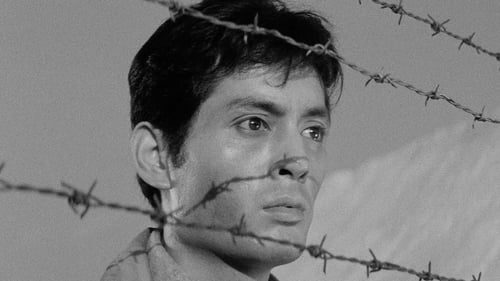

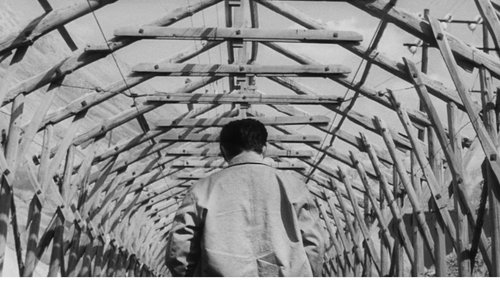
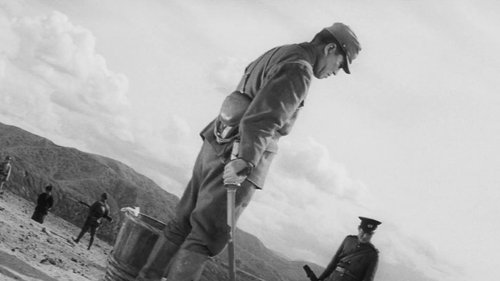
Videos
Reviews (1)
druscilla_of_old
I'm finally through watching this mammoth of an epic (for several days) and I'm beyond impressed! When I think of a great movie, this trilogy comes very close is what I typically have in mind: A well-written, well-directed, well-acted story that actually has something important to say about life and the world as much as it entertains. That is, a great movie ought to be bold and creative in communicating a strong social and/or moral message as much as, or even more than, it entertains. This 9+ hours epic by Kobayashi successfully manages this albeit not without its faults, which I'll come to later. Firstly, I'd just like to say that of all the things I loved about this trilogy, most of all, I adore how Kobayashi - a self-proclaimed socialist himself - explores the humanistic principles behind socialism and the challenges that face their actualization within a capitalist and bureaucratic reality where almost everyone is content with the delusions that seemingly justify the capitalist hell they're living in. I love how he does this in a seamless yet starkly realistic way that, while it ruthlessly critiques capitalism and its consequences, it also lays bare the challenges facing any attempts to implement socialist ideas within systems mired by violence, inequality, oppression, and authoritarianism. He also does it with such pathos that makes this epic unforgettable to anyone with the courage to sit through it to the end. I was also impressed by the scathing critique of Japanese imperialism that Kobayashi offers. This would have been especially powerful and controversial at the time of the movies' releases because the genocide committed against the Japanese during World War II by America in Hiroshima and Nagasaki had cemented Japan's image as a victim in global consciousness and made it something of a taboo in the Western world and in Japan to be critical of the atrocities the Japanese empire committed against Chinese people during the war. (For instance, try mentioning the Rape of Najing even today in Japan.) Kobayashi reminds his audiences that Japan's victimhood should not act as a shield against the atrocities it committed during the war. (As an aside, notice the parallel lesson to be derived here from the fact that the Nazi Holocaust has been used by Israelis and Zionists for decades to justify their genocide and oppression of Palestinians. Like in the case of Japan and its atrocities against China as critiqued by Kobayashi, Jewish victimhood in the Holocaust should not be exploited by Zionists and their backers to justify their atrocities against Palestine and to shield "Israel" from criticism for doing so.) Also worth a positive mention are the performances of Tatsuya Nakadai (as Kaji) and Michiyo Aratama (as Michiko) which are both deserving of multiple awards. Positives aside, one of my problems with this epic was its title relative to the pessimistic tone it adopts. Titling the epic 人間の條件 ("The Human Condition") implies an inevitability to the problems explored in it, as if they're an indelible part of being human. Not only is this not factually correct, but it is also antithetical to social activism as it falsely implies that no attempt to improve human societies will succeed because inequalities and oppression are simply... "human." While this may have not been Kobayashi's intention, it definitely is the kind of impression that one comes out of the movie with, especially given its ending. Another problem I had with the trilogy was its inadequate and poor representation of women's condition. While some of the gender inequalities depicted in the film were necessary (e.g., comfort women) in order to realistically capture the position of women in war-time Japan, the uni-dimensional representation of women as helpless victims or hopeless romantics who simply wouldn't know what to do without men is emblematic of the sexism, intentional or otherwise, of male filmmakers in the global film industry. Still, compared to the depiction of women by other male directors of the time (e.g., Akira Kurosawa), Kobayashi was miles ahead of them given how he centered some women characters, poorly written as they were, in this epic. It is also worth noting that the editing of the movies in this trilogy, especially the last two, is choppy sometimes, and the lighting isn't always perfect. However, none of these problems detracts from the brilliance that shines through the entire trilogy. In conclusion, despite its problems, I consider this movie a masterpiece in its own right and believe that, compared to the likes of Kurosawa, Kobayashi is insanely underrated. I strongly recommend this movie to EVERYONE. Literally, every human being needs to watch this classic at least once in their life. I know I'm almost certainly gonna rewatch it several times before I die.
Recommendations
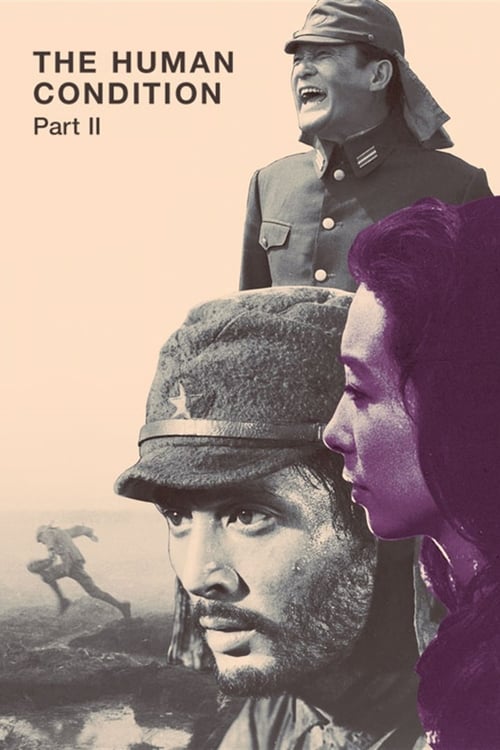
The Human Condition II: Road to Eternity

Empire of the Sun
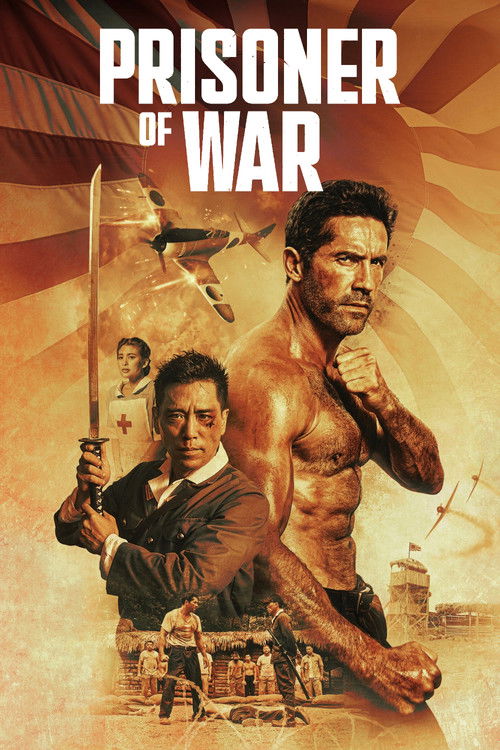
Prisoner of War
The Last Emperor

The Great Escape

The Ballad of Narayama
Wife of a Spy
The Boy in the Striped Pyjamas
Emperor

The Zone of Interest

The Monuments Men

Where Eagles Dare

11 Rebels
The Bunker
Memphis Belle
Six Minutes to Midnight

Devotion
Ugetsu

A Hidden Life