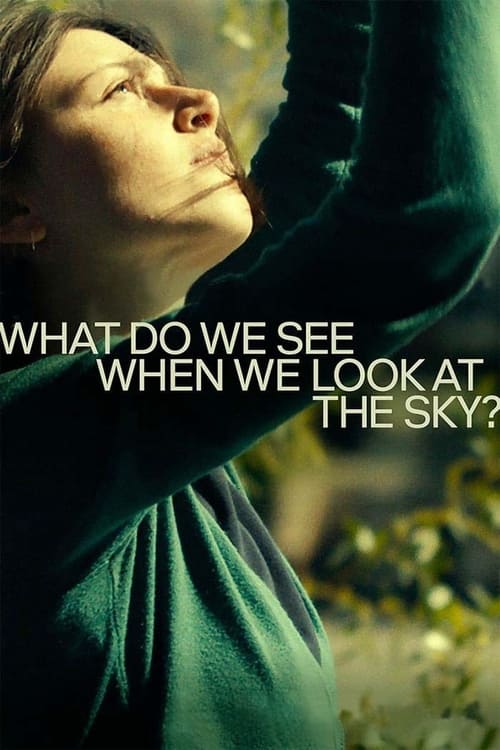



What Do We See When We Look at the Sky?
In the Georgian riverside town of Kutaisi, summertime romance and World Cup fever are in the air. After a pair of chance encounters, pharmacist Lisa and soccer player Giorgi find their plans for a date undone when they both awaken magically transformed with no way to recognize each other.
Top Billed Cast



Photos




Videos
Reviews (1)
badelf
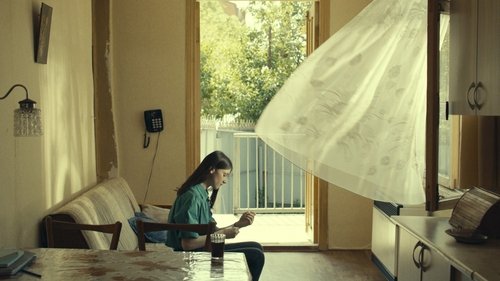
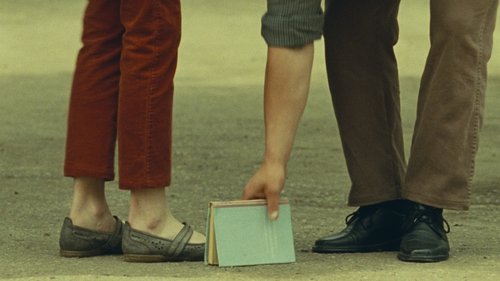
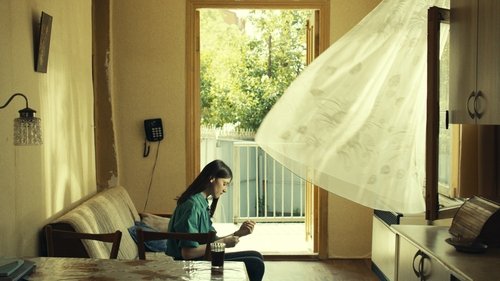
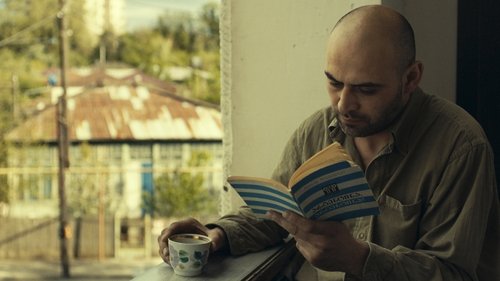
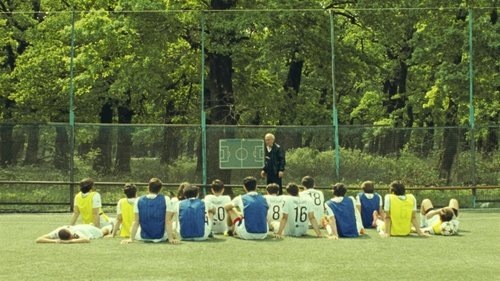
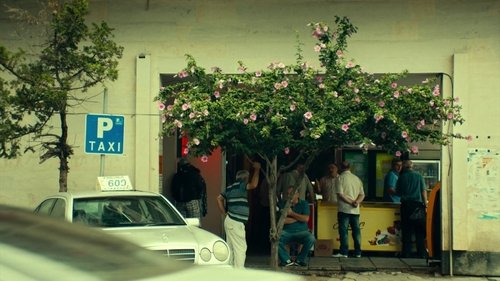
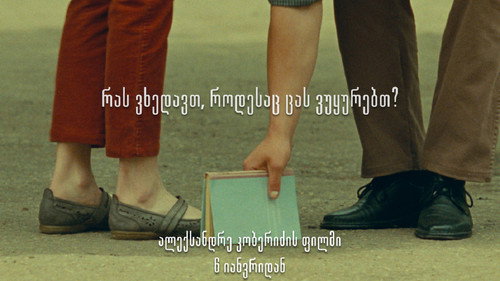
Many old Europeans, including my grandmother, had their superstitions; the evil eye, the protective gestures, the whispered warnings against certain glances or envious attention. Alexandre Koberidze has taken one such ancient belief and turned it into a love story fable: two young lovers in Kutaisi, Georgia meet by chance, fall instantly in love, but are cursed by the evil eye so that when they arrive for their first date, their physical appearances have changed and they cannot recognize each other. It's a charming premise, whimsical and melancholic in equal measure. But that's not what this film is about. The love story, enchanting as it may be, functions as a stage, a production design element for a much greater theme: identity. The "evil eye" curse doesn't just alter appearances; it strips away the lovers' defining characteristics entirely. Giorgi, who was defined by football, his skill and passion for the game an essential part of who he understood himself to be, gives away his ball to local kids. Perhaps they can grow up to play the game that no longer defines Giorgi. Lisa, a pharmacist, loses her profession, her knowledge, the identity she built through years of training. The film asks the fundamental question: who are we, really, when the things that define us are taken away? Are we our professions, our talents, our physical selves? If all of that is stripped from us, what remains? This is where Koberidze's film opens into something far more expansive. The personal question of identity, the lovers searching for themselves and each other in their transformed states, becomes a lens through which to examine a larger question: Georgian identity itself. There are subtle remarks throughout the film, hints about the South Ossetian war, quiet acknowledgments of Georgia's fierce independence from Russia. Georgians have their own identity, hard-won and fiercely protected. Georgia has had occupants for nearly two million years; empires have come and gone, conquerors have swept through, but the Georgian people remain, with their own unique language, their own distinctive script, their own stubborn persistence. The film becomes, in its leisurely unfolding, a montage of the lives of normal Georgians. We watch everyday routines, the rhythms of a city, the texture of ordinary existence. The specifics are less important than the cumulative effect; this is not a film building toward narrative climax, but rather one revealing collective identity through accumulation, through patient observation. We see Kutaisi during World Cup season, the communal passion for football, the way the city organizes itself around shared ritual. We see work, rest, conversation, the small gestures that constitute a life. What emerges is a portrait not of individuals, but of a people, their character, their resilience, their particular way of moving through the world. Koberidze's style is utterly unique, a kind of playful formalism that constantly reminds us we're watching a constructed artifact while simultaneously drawing us into emotional intimacy. The narrator speaks with a tongue-in-cheek sense of humor, addressing us directly, commenting on the action, sometimes offering information, sometimes withholding it, a storyteller who knows more than he's telling. The camera often abandons faces entirely, focusing instead on montages of feet walking, hands working, body parts in motion. It's a strategy that reinforces the film's central concern: if we can't see someone's face, if we strip away the visual markers we use to identify people, what do we actually see? What remains visible? The film's techniques recall silent cinema—dissolves, iris shots, intertitles, a reliance on visual storytelling over dialogue—but deployed with contemporary self-awareness. Koberidze understands that cinema itself is a kind of magic, a transformation of reality through light and time, and his film revels in that transformative power. The final sequence, in which the filmmakers and their subjects gather for a screening, becomes a meditation on recognition, on the strange intimacy of seeing oneself through someone else's eyes, on the way cinema can reveal what ordinary sight misses. This is patient, generous filmmaking, willing to trust the audience to sit with ambiguity, to let meaning accumulate slowly rather than demanding immediate clarity. It asks us to see beyond surfaces, beyond the markers we use to categorize and identify, to something more essential underneath. It's a film about lovers who can't recognize each other, but it's also about a people who have maintained their identity through countless occupations, who know who they are even when the world tries to tell them otherwise. 9/10: a luminous, deeply humanistic meditation on identity, both personal and collective, wrapped in the form of a fairy tale and delivered with wit, warmth, and formal invention.
Recommendations
Blind

Not Easily Broken
Winter's Tale
Ali and Nino
Nine Lives
Northfork
The Yellow Handkerchief
Hello, Goodbye, and Everything in Between
A Big Bold Beautiful Journey
Mr. K

Life in a Year
Pinocchio

Nobody Has to Know
Two for the Seesaw
The History of Love

Salome

Before I Fall

I'm in Love with a Church Girl

The Best of Me
The Fugitive Kind
Information
Keywords
Production